
By Sarah Barton, PhD Candidate for the Evanston Women’s History Project, March 2026
Evanston is known for many things, Northwestern University, the WCTU national headquarters, it’s beautiful parks and beaches, but less is known about it’s massive impact on theatre education, Hollywood actors, comedy, children’s theatre, national education standards, and theatre writ large in the United States though the work of innovative playwrights, trailblazing acting coaches, incredible artists, and ground breaking theatre companies. The legacy continues today in the work of the Piven Theatre Workshop, the Gloria Bond Clunie Playwrights Festival, and the enmeshment of theatre into District 65’s curriculum.
The question naturally arises, why has this Chicago suburb developed such an incredible artistic community that has had a significant national impact? The answer lies in the work of several women who were foundational to creating, maintaining, and exporting Evanston’s flourishing theater scene. Their stories highlight Northwestern’s renowned acting program–originally Cumnock School of Oratory–and the role of educators as centerpieces of the city’s thriving arts community, and they begin with Miss Winnifred Ward, whose pioneering work in children’s theatre laid the ground work for women like Alvina Krause, Joyce Piven, Gloria Bond Clunie, Karen Erickson, Angela Murphy and more to blaze trails for their students, shape Oscar winning actors and establish vibrant community theatres across the nation.
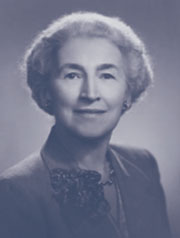
The work of the world-renowned educator Winifred Ward is the beginning of Evanston’s long history with theatre and theatre education. Ward is considered to be the Mother of Creative Drama by many. It is a teaching method in which children engage in acting activities and scenes without a script, forcing them to develop improv skills. The children are given the creative space to develop the play, its major themes, and emotional tones. This new approach reflected Ward’s commitment to the progressive education movement of the 1930s, which sought to educate the whole child through hands-on projects, emphasizing social skills, problem solving skills, and critical thinking, rather than sedentary textbook based learning. Maria Montessori and Rudolf Steiner–pioneers in Montessori and Waldorf education respectively–were prominent members of the Progressive Education Movement.
Ward, a native of Eldora, Iowa, came to Evanston to attend Northwestern’s Cumnock School of Oratory in 1903. In 1918, she earned a Ph.D. in Education from the University of Chicago before joining Northwestern’s School of Oratory where she remained until her retirement. In 1924 Evanston passed a resolution adding dramatics into the Elementary School curriculum, and Ward was placed in charge of developing and implementing the curriculum. The following year she, along with colleagues at Northwestern, founded the Children’s Theater of Evanston as a program for Evanston-Skokie School District 65, which has been called “the birthplace of theater for children in the United States.”[1] Ward directed seventy-six plays with over 118,000 children and adults participating. This work spurred the building of auditoriums in elementary and middle schools in the city. The theater closed for a brief period between 1971 and 1980 due to budget cuts in the school district. However, it continues to put on productions today, with the last show being The Mystery of the Time Traveling Book.
Ward’s work extended far beyond the boundaries of Evanston. Her productions brought in audiences from around the world, and she traveled across the country putting on productions, giving lectures, and hosting theatre workshops. In 1936 she traveled to the USSR for a Theatre Festival to direct “Emperor’s New Clothes.” While there, one of her Northwestern students found her surrounded by Soviet children and wrote about Ward’s love for children, “She could not understand them nor speak to them, but her love of all children and, above all, of children in a theater radiated from her face and drew those children to her… They had only to see the light in her face and know with the unerring instinct of children that here was a woman who had given her life to nurturing all that is good and beautiful and true for children everywhere.”[2] In 1944 Ward organized the first national Children’s Theater Conference, which continues today through the work of the American Alliance for Theatre and Education.
Ward retired in 1950, but her work continued through workshops, speeches, and as a representative of Children’s Theater at UNESCO. She received several honorary degrees from Adelphi University, Western College for Women, and Eastern Michigan University. Her legacy was carried by her many students that continued to produce plays, start their own children’s theaters throughout the country, and in the theater educators that came after her. Gloria Bond Clunie, an award-winning playwright, director, and educator, found inspiration in Ward’s legacy and her approach to children’s theater and education.
Clunie is a Northwestern graduate (B.S. Theatre and MFA Directing) and worked in Evanston at Chute Middle School as a creative drama specialist–the field which Ward pioneered—for over thirty years. Clunie’s love for theater and storytelling began at a very young age. She acted in her first play in kindergarten and wrote her first play in fourth grade. She found that people could understand the world around them better through stories, which has remained one of the guiding principles in her work. The integration of the schools in her hometown of Henderson, North Carolina was a pivotal moment in Gloria’s path to theater. The Black children in the drama department wanted to put on a play about Black History, but the white teacher had no knowledge of the subject. Naturally, the students turned to Gloria to write the play, which earned her a spot at the renowned Chatham Hall boarding school. The all-girls school fostered an environment of creativity and empowerment during the turbulence of the 1960s.
Though she did not intend to become an educator, her work with Anne Thurman at Northwestern inspired her to work in the classroom. Clunie found over the years that the students began to understand themselves and others more clearly through storytelling–a theme that resounds through Clunie’s work. She directed over 100 productions during her time with District 65 and developed drama standards and curriculum for the district. Clunie maintains that the inclusion of drama in the district’s elementary and middle schools is a main reason why there is so much support for theatre in Evanston. In addition to her role as an educator, Clunie has written and directed dozens of plays for children across the country. In 2018, the Chicago Children’s Theatre invited Clunie to write and direct a play addressing diversity and skin color. “My Wonderful Birthday Suit” gives children and parents the vocabulary to talk about race and difference and encourages those conversations, rather than emphasizing “race blindness.”
One of the key themes of Clunie’s career has been telling stories of Black Americans and the African Diaspora. In this vein, she co-founded the Fleetwood-Jourdain Theatre by transforming an old gymnasium in Evanston’s Cultural Arts Center. As the founding Artistic Director, she carved out a home for Black theater in Evanston, ensuring that Black stories would continue to be told. Clunie is also a founding member of the Playwriting Ensemble at Chicago’s Regional Tony Award winning Victory Gardens Theater. Clunie’s commitment to telling Black stories is representative of her philosophies about theater and storytelling; telling these stories on stage helps other to understand the hardship of Black life in the United State but also provides space for stories of joy and triumph. One of her most produced and awarded plays, North Star, follows a young girl in 1960s North Carolina during the Civil Rights Movements, as her parents debate if she should participate in the demonstrations or shield her from the growing tensions.
Chanting “Umjoa!” (unity) before performances is a ritual for Clunie. She emphasizes unity amongst the actors and crew for all of her productions, and seeks to inspire that same unity in the world through her art. Collaboration and partnership with the community of Evanston have enabled the longevity of the Fleetwood-Jourdain theatre. When budget cuts threatened to close the theatre, the public rallied around it to ensure its continued operation. The community support of the theatre can be credited to Clunie and her love for the people and city of Evanston. Though she tells Black stories, her audiences come from all walks of life and leave the auditorium with a new lens into the world. Today in Evanston, a new theatre festival which began in 2024, The Gloria Bond Clunie Playwrights Festival, honors her contributions to the arts by showcasing young and up-coming playwrights’ work over the course of two days. The festival continues Clunie’s legacy by uplifting new voices telling stories of Black Americans and the African diaspora.1
Another notable Evanston theater educator is Karen Erickson, a certified K-12 educator, playwright, published author, director and Executive Director of Creative Directions for the Kennedy Center in Washington D.C. Erickson earned a bachelors and masters degree from Illinois State University. Her career started inside the classroom teaching English and Creative Speaking, and she slowly began incorporating creative drama into her lessons, which bloomed into an expansive theatre program. During this time, she also helped other teachers incorporate drama into their traditional subjects. Blending these two passions into a career has been the biggest joy of her professional life.
While her career began in the classroom, Erickson dreamed of working in a theatre. Naturally, when she was offered the opportunity to assist legendary playwright Tennessee Williams at the Goodwin Theatre in Chicago, Erickson jumped at the opportunity and assisted Williams on two productions. Following this endeavor, she started working at Trinity Square Ensemble Theatre in Evanston where she served as the artistic director for ten years. While Erickson was artistically filled, she needed extra income–the eternal plight of struggling artists. So, she stepped one foot back into the classroom as a teaching artist, incorporating drama into traditional subjects and sharing her unique teaching style with other teachers. Soon, her approach garnered praise and attention, and she began working for the Illinois Arts Council and Urban Gateways, helping to create state and national standards and assessments that included a creative drama curriculum. As she began traveling across Illinois, young students began to affectionately call her “The Drama Lady” and adults dubbed her “Lady K.” Erickson’s work garnered national attention, and she was hired as a National Workshop Leader. In this position, she was able to travel around the nation to work with educators to incorporate drama, acting exercises, and body movement into the classroom.
Erickson’s classroom techniques are a natural outgrowth of Ward and Clunie’s work in creative dramatics. Understanding the transformative power of theatre performance and the reality that not all children have the opportunity to participate in these performances, Erickson brought theatre into the classroom and witnessed incredible transformations in her students. One young girl, who was a selective mute, spoke for the first time during a performance where she was a princess slaying a dragon. Another student, a young man in high school, who had a reputation as a bad student, shocked everyone with his performances in Erickson’s productions–one was a Shakespearean play–and earned the award of best actor.2 These stories highlight the overriding theme of Erickson’s work, “Drama is the missing link in teaching literacy and getting students to understand and enjoy reading, writing, speaking, and listening.”[3] Her work in the classroom and on the stage has been a springboard for many creative careers and allowed her to work with notable artists. She worked with Fred and Ben Savage, David Mamet, and Stephen Colbert, directing him in his first professional production. Many of her students found careers in the arts. One is a producer on Broadway, and another is a TV Soap Opera star.
Northwestern has been a lynchpin for Evanston’s theatre community and has given the town several claims to fame and national importance. The Cumnock School of Oratory attracted the talent of Ward and the legendary Alvina Krause. Krause was born into a small-town Wisconsin farming family with an innate curiosity about people and why they behaved certain ways. Her love for the arts was nourished through reading and gave her the drive she needed to leave her small town of New Lisbon. Krause was drawn to teaching from an early age and as a senior in high school, she turned down a marriage proposal, saying “Why, I’m going to have a career. I’m going to do things. I’m not going to get married.”[4] After high school graduation she came to Evanston to study at Cumnock Oratorical School before becoming a high school teacher for several years.
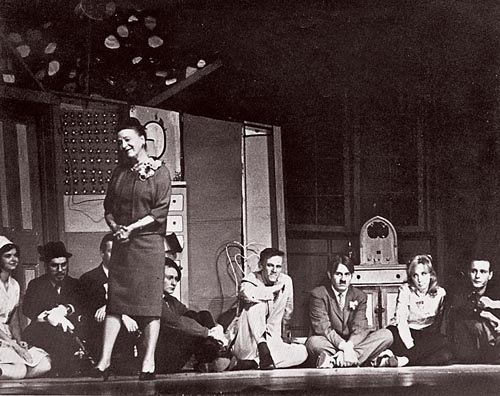
Krause earned her bachelor’s degree from Northwestern in 1928, after which she continued teaching in high schools across the country. After several years in the high school classroom, Krause moved to St. Paul to teach drama at Hamline University. While at Hamline, Krause brought her students to perform at a Northwestern drama festival. Faculty at the festival were so impressed with Krause’s students that they offered her a position at Northwestern, where she taught for 34 years. Krause is a foundational piece in the success of Northwestern’s acting program. When Krause was first hired, acting was a simple one-year program, but she managed to transform and expand it into a three-year program that helped shape some of the nation’s finest actors, including four Academy Award winners: Charles Heston, Cloris Leachman, Jennifer Jones, and Patricia Neal.
In 1963 when Krause reached Northwestern’s mandatory retirement age, the university tried to force her into retirement. However, a wave of protests from current and former students made the university change their mind, keeping her on for another five years. In a letter to university officials, students wrote, “Great teachers in any subject at any time are rare and Miss Krause is surely one of them. She is a source of inspiration and a reference point of glowing integrity.”[5] The indignity over Krause’s forced retirement traveled as far as New York with former student and famous actress Paula Prentiss calling the university to express her anger over the situation.
Krause saw theatre as a way to reach people and move people to care for others and their unique problems. Krause encouraged students to journal everything they saw around them and experienced as sources of inspiration for their performances and characters. Though the journals were confidential, she would often use anecdotes from the journals as acting prompts in class. Many of Krause’s methods were quite intense. One student spoke of how Krause slapped him across the face to draw an emotional response out of him before he went on stage. Krause’s approach to theater emphasized the production and ensemble rather than a single shining star. In 1968 she complained about the changing face of theater, “We’re saddled with a star system that creates personalities, not actors,” and noted, “The play is the star, the whole company, not just an individual.”[6] Krause’s commitment to ensemble performances paralleled her love for community theatre. During her life, she helped found three separate theaters: Eagles Mere Playhouse on the NU Campus (1945), Chicago’s Harper Theatre (1966), and the Bloomsburg Theater Ensemble (1977). Each of these theatres remain in operation today and are crucial to the artistic communities which surround them. After Krause’s retirement in 1971, she moved to Bloomsburg, Pennsylvania to live with her life partner, Lucy McCammon, until Krause’s death.
Krause’s legacy continues through Northwestern’s acting program, which has produced legendary actors, playwrights, directors, one Duchess of Sussex, and countless comedians that have shaped the American comedy scene. Indeed, The Practical Theatre, founded by NU students, Brad Hall, Paul Barrosee, Robert Mendel, and Angela Murphy, in 1979. The theatre launched the career of television icon Julia Louis-Dreyfus, who dropped out of school in 1982 at 21 years old, when she was called to join the cast of Saturday Night Live, along with Hall, Barrossee, and Gary Kroeger. Not only did the company launch several illustrious careers, it also provided a platform for aspiring women in comedy—a male dominated field, then and now—through Practical Women, spearheaded by Murphy. At its height, the young comedy theatre even challenged The Second City as Chicago’s premiere comedy venue.
While not connected to Northwestern or Evanston’s public schools, Joyce Piven’s work has left a permanent mark on the Evanston community. Some have called Piven the Matriarch of the Chicago Theatre Family, as she played a vital role in expanding Chicago and Evanston’s theatre community. Born in Chicago in 1930, Piven had always been drawn to the stage. After graduating from Hyde Park High School, she attended the University of Chicago, and while the school did not have a theatre program, she was an active part of the groundbreaking group of theatre artists in and around the university. Joyce was one of the founding members of Playwrights Theatre in 1953 along with her husband, Byrne Piven, Paul Sills, David Shepard, Sheldon Patinkin, Elaine May, and others. Playwrights Theatre Club was one of the first significant off-Loop theatres in Chicago, located in Old Town. Though the theatre was open for just two years, the collaborations and work done there would shape the future of Chicago theatre and improv comedy.
The couple moved to Evanston in 1970 and founded the Piven Theatre Workshop, which provided theatrical training for thousands of children and adults over the decades. It contributed to the growth of Evanston’s theatre community and is nationally renowned for Piven’s unique acting philosophy. It is a highly collaborative theatre philosophy centered on theatre games, and ensemble work. Some of their earliest students included John and Joan Cusack as well as their two children. Piven eventually co-authored a book along with Susan Applebaum entitled: In The Studio With Joyce Piven: Theatre Games, Story Theatre and Text Work For Actors. Piven’s work had regional and national influence. Her collaboration with Paul Sills at the Playwrights Theatre Club and founding of the Compass Players in 1959 would lead to the opening of the famed Chicago improv theatre, The Second City. Joyce and Byrne Piven’s influence helped shape the Chicago theatre and improv scene throughout the twentieth century.
While Piven had an indelible impact on Evanston and its theatre community, her legacy far exceeds the Chicagoland area. Many notable alumni of the Piven Theatre Workshop have made lasting contributions to film, television and theater, including Jeff Garlin, Kate Walsh, and Tony-nominated playwright Sarah Ruhl. In Evanston, the Piven Theatre Workshop remains a vibrant theatre under the Artistic Direction of Jennifer Green and continues to train new generations of actors, directors, and playwrights.
A theme that connects these masterful women is the role of theater in understanding the world around us, those who live in it, and oneself. Each of these women found the theater to be a wonderful space in which audiences could learn about others, especially those who had vastly different life experiences than themselves. They prove that theatre can bring people together, especially during turbulent and unpredictable times. These themes seem especially relevant now, in a time where political opinions, geography, and the internet are widening the divides between us. Maybe we don’t want to better understand our political adversaries, but the work of these women offers a reminder that we are all more alike—in our suffering, hopes, and needs—than we often realize.
[1] “Don’t say we’re dead ‘til July: Theatre 65” Evanston Review May 8, 1975
[2] Fitzroy Davis, “On Winifred Ward” The Evanson Review October 27, 1949.
[3] Emily Depperman, “A Redbird alum brings the stage to the classroom,” Illinois State Magazine (Normal, IL) November 22, 2022.
[4] McCants, Billie “Alvina Krause on Women in Theatre”. In Chinoy, Helen Krich; Jenkins, Linda Walsh (eds.). Women in American Theatre 3rd ed, (New York, NY: Theatre Communications Group), 2006, 113.
[5] Margaret Scherf, “Personalities, Not Actors, Created: Star System Strangles Theater,” The Decatur Daily Review, January 28, 1968.
[6] Margaret Scherf, “Personalities, Not Actors, Created: Star System Strangles Theater,” The Decatur Daily Review, January 28, 1968.